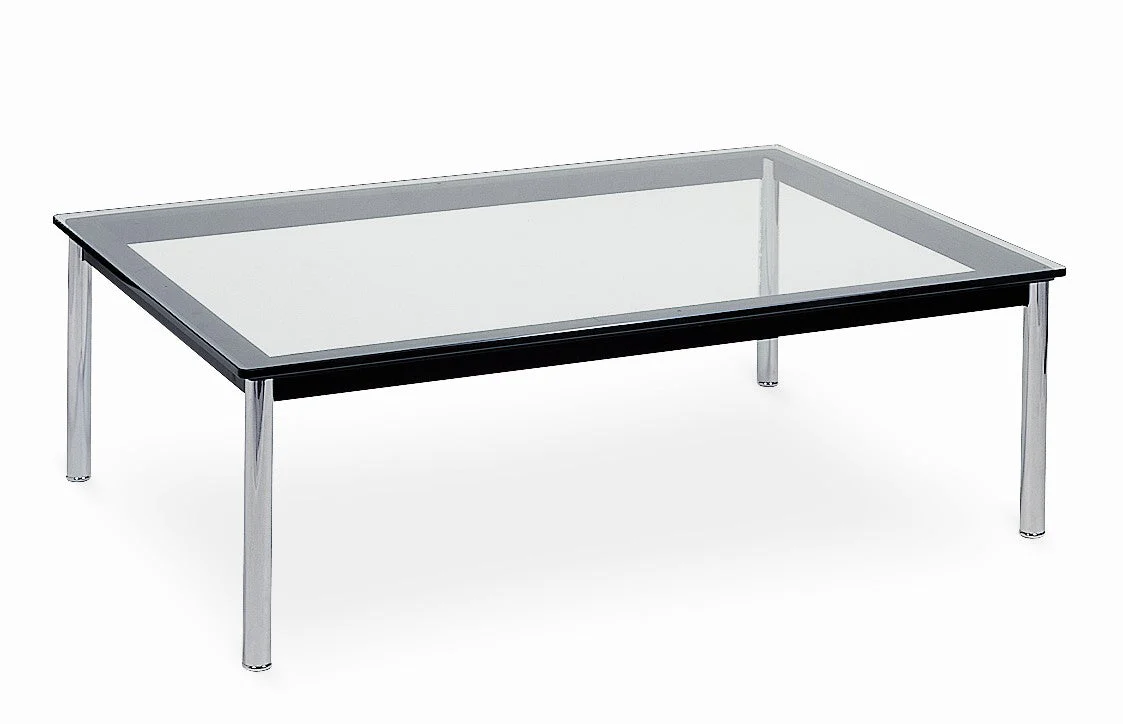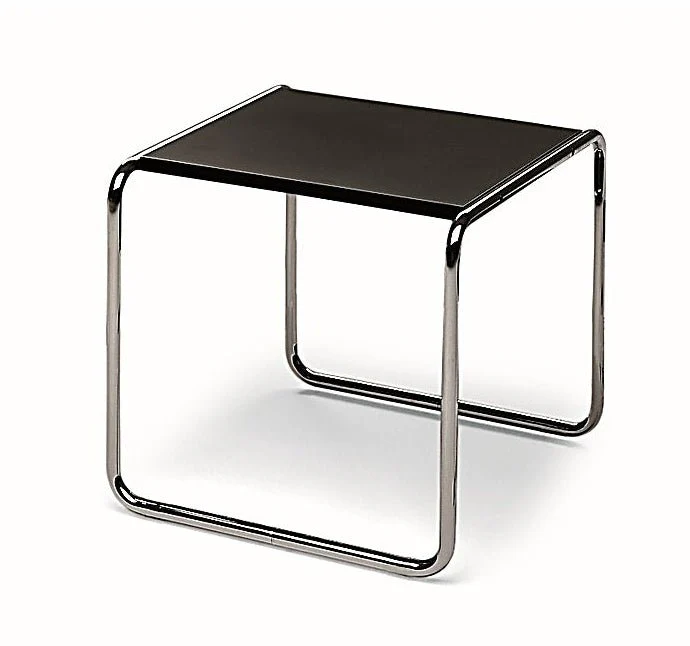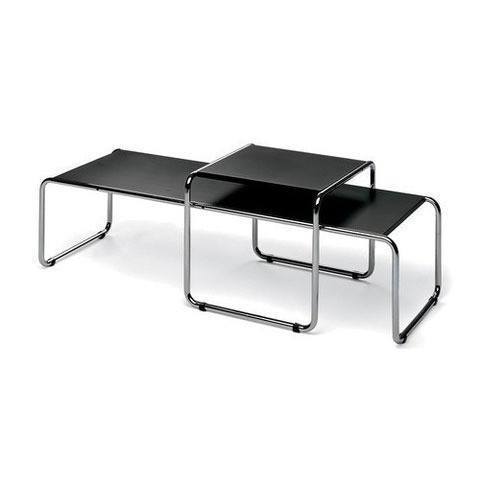
Mies van der Rohe Tugendhat Coffee Table
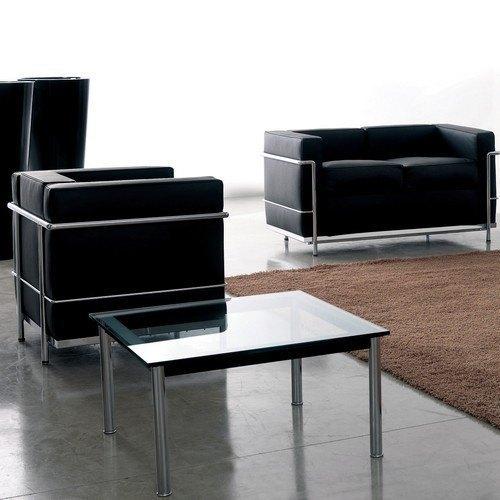
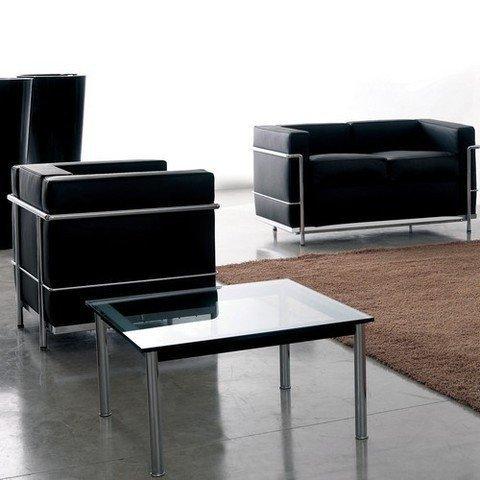
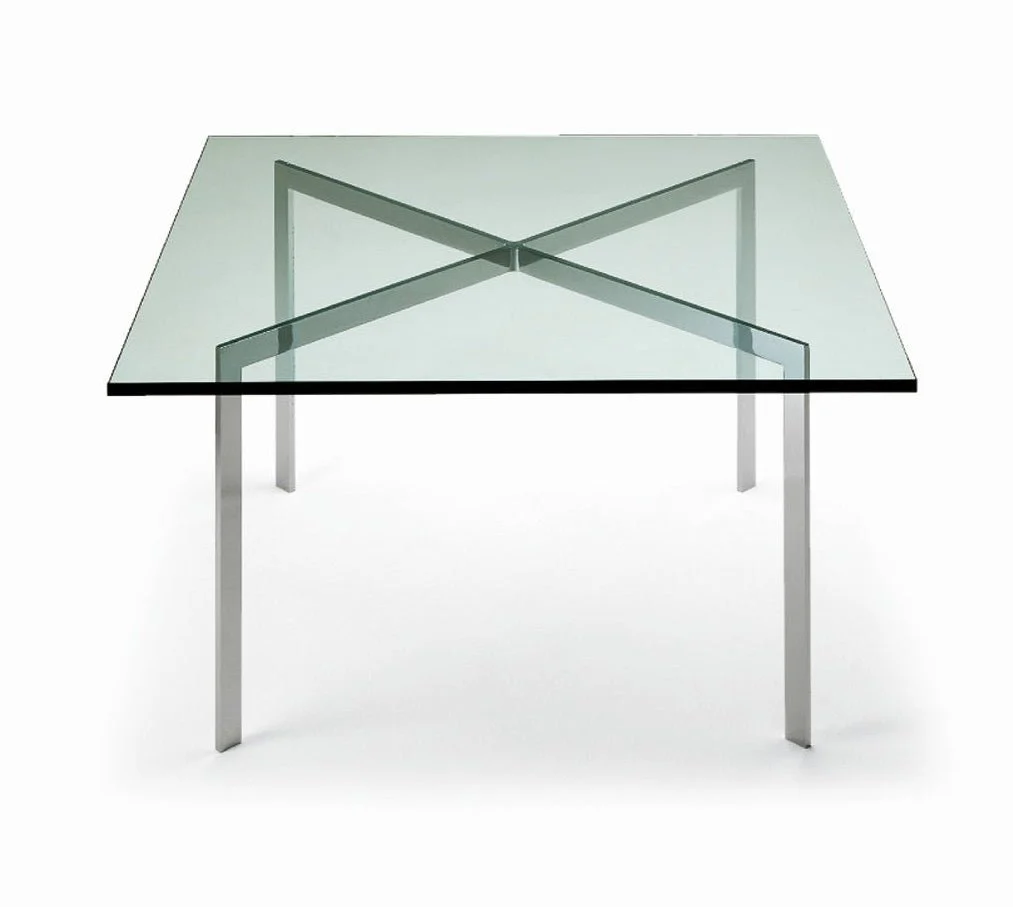
The Mies van der Rohe Tugendhat Coffee Table was originally named the "Dessau table" and later gained true recognition and identity at the Tugendhat house in Brno in 1930. It was part of a group of furniture that Mies designed for this home.
One of Mies van der Rohe’s most notable architectural designs was the German Pavilion for the Barcelona World’s Fair (1929). The ceremonial hall, furniture, and sculptures were masterpieces that were reconstructed in 1986. The special design approach of the hall is notable and seen in future Mies designs. The hall has a little separation by walls, rather than by vertical dividing elements such as glass or wood. Mies has been quoted as saying, “...the house is a unit. Not a series of rooms side by side and covered by a roof, but an itinerary that leads from one room to another, keeping with the occupants’ way of life.”
Early mass-production versions of the table were completed with a glass or rosewood top.
Made in Italy.
Dimensions: H 18 1/4" D 36" W 36" (3/4" glass) or H 18 1/4" D 40" W 40" (3/4" glass)
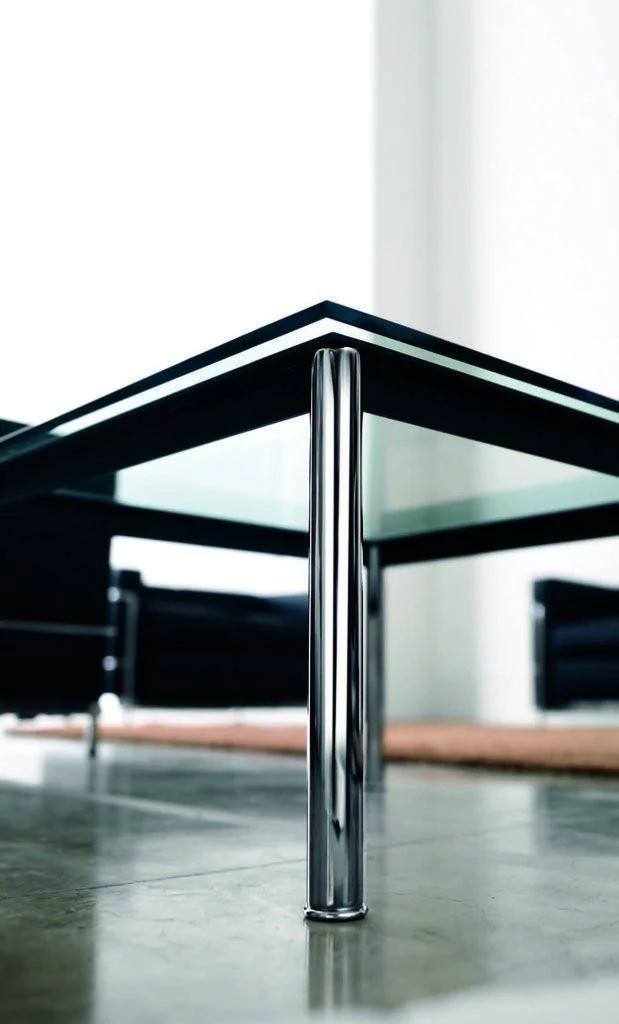
Materials: Cocktail table, polished chrome flat bar metal frame with 3/4" clear glass top.
Original: $1,839.00
-70%$1,839.00
$551.70Product Information
Product Information
Shipping & Returns
Shipping & Returns
Description
The Mies van der Rohe Tugendhat Coffee Table was originally named the "Dessau table" and later gained true recognition and identity at the Tugendhat house in Brno in 1930. It was part of a group of furniture that Mies designed for this home.
One of Mies van der Rohe’s most notable architectural designs was the German Pavilion for the Barcelona World’s Fair (1929). The ceremonial hall, furniture, and sculptures were masterpieces that were reconstructed in 1986. The special design approach of the hall is notable and seen in future Mies designs. The hall has a little separation by walls, rather than by vertical dividing elements such as glass or wood. Mies has been quoted as saying, “...the house is a unit. Not a series of rooms side by side and covered by a roof, but an itinerary that leads from one room to another, keeping with the occupants’ way of life.”
Early mass-production versions of the table were completed with a glass or rosewood top.
Made in Italy.
Dimensions: H 18 1/4" D 36" W 36" (3/4" glass) or H 18 1/4" D 40" W 40" (3/4" glass)
Materials: Cocktail table, polished chrome flat bar metal frame with 3/4" clear glass top.